By Dr. Joe Thompson | Rhythm Health & Performance | Santa Cruz, CA

If you're considering chiropractic care for your child, you probably have a few questions. What does a pediatric chiropractor actually do? What happens during the first appointment? And how is neurologically focused chiropractic care different from what you might have experienced yourself?
At Rhythm Health & Performance in Santa Cruz, I work with families at all different stages, from newborns and toddlers to teenagers. Some parents are exploring chiropractic care as part of their family's wellness routine. Others have specific concerns and want to better understand their options.
Whatever brings you in, I want you to understand what we're doing, why we're doing it, and what we learn along the way.
Here's a look at what you can expect.
What Makes Rhythm Different From a Traditional Chiropractic Office?
Most people associate chiropractic care with back pain, neck pain, and adjustments.
My approach at Rhythm focuses on the nervous system.
The nervous system connects the brain and body, coordinating movement, sensation, and our responses to the world around us. It's constantly processing information and helping us adapt to changing demands.
And adaptability is really what interests me.
Our bodies aren't static. We're constantly growing, changing, responding, and recovering. That's especially true for children, whose bodies and brains are developing at an incredible pace.
As a PX Docs-trained chiropractor, I incorporate neurological assessment technology into my clinical process to gather information about certain aspects of physiological function.
It's one of the ways I approach care differently, and I'll explain more about that below.
Step 1: Getting to Know Your Child
The first step is a conversation.
I want to hear what's bringing you in, what concerns you have, and what you've noticed about your child's health and development.
For babies, we'll discuss pregnancy and birth history, feeding, sleep, movement, and early milestones. With older children, we might talk about physical activity, injuries, posture, daily routines, or other relevant concerns.
We'll also review medical history, previous evaluations, and any other healthcare professionals involved in your child's care.
All of this gives me context.
Two children can have similar concerns but very different histories. Understanding those differences helps me determine what to evaluate and whether chiropractic care is appropriate.
It's also your opportunity to ask questions and tell me what you're hoping to accomplish.
Step 2: Taking a Closer Look With INSiGHT Scans
One of the things that makes Rhythm different from many chiropractic offices is the technology I use during assessments.
I wanted to build a practice where we could gather information about physiological function and revisit certain measurements throughout care, rather than relying entirely on how someone feels during a particular visit.
That's where INSiGHT Scans come in.
These noninvasive assessments collect three types of measurements.
Surface Electromyography (sEMG)

Surface EMG uses sensors placed on the skin to measure electrical activity in muscles near the spine.
The readings provide information about muscle activity patterns during the assessment.
Thermal Scanning
Thermal scans measure skin temperature patterns along the spine.
Skin temperature is influenced by several factors, including circulation, environmental conditions, and normal physiological variation.
Heart Rate Variability (HRV)
HRV measures variations in the time intervals between heartbeats.
Researchers use HRV to study aspects of autonomic nervous system activity, including physiological responses to different demands. Results vary with age, breathing, activity, and other factors.
What Do These Scans Tell Us?
I use these measurements alongside your child's health history and physical examination to inform my assessment.
They can provide additional physiological information, but they aren't a complete measure of nervous system health or validated diagnostic tests for developmental or neurological conditions.
The specific scans we use depend on your child's age and individual circumstances.
For me, the value of gathering information is having a more complete conversation about what we're evaluating and being able to revisit findings when appropriate.
Step 3: Developing Your Child's Care Plan
Once we've completed the consultation and assessment, I review everything we've learned.
Your child's age, health history, examination findings, specific concerns, and your family's goals all help inform the recommendations.
If chiropractic care is appropriate, I'll explain what I recommend and why.
We'll discuss the goals of care, the anticipated frequency of visits, and how we'll evaluate progress.
And sometimes the most appropriate next step involves another healthcare professional. If something requires further medical evaluation, I'll explain that, too.
The goal is a plan that makes sense for your child, rather than applying the same approach to every family.
Step 4: Your Report of Findings
In the PX Docs clinical process, the Report of Findings is a dedicated conversation about your child's assessment results and recommended next steps.
I'll walk you through the relevant findings, explain what they mean, and answer your questions.
If chiropractic care is recommended, we'll discuss the proposed approach, potential benefits, limitations, risks, and alternatives.
We'll also talk about what progress might look like and how we'll know whether care is helping.
I want parents to understand the reasoning behind their child's care plan, not just receive a set of recommendations.
You can ask questions, consider your options, and decide what feels appropriate for your family.
Step 5: What Does a Pediatric Chiropractic Adjustment Look Like?
This is often the part parents are most curious about, especially when bringing in a baby.
Chiropractic care for children isn't identical to care for adults.
A newborn, a toddler, and a teenager have different anatomy, developmental needs, and physical considerations. Any treatment needs to account for those differences.
At Rhythm, I use individualized, age-appropriate techniques. For younger children, that may involve gentle contact or low-force approaches when clinically appropriate.
I'll explain what I'm doing before we begin, and we'll work at a pace that respects your child's comfort.
Some kids are curious about everything happening in the office. Others need a little time to get comfortable with someone new. That's perfectly fine.
An adjustment isn't automatically part of the first appointment, and not every child is an appropriate candidate for spinal manipulation.
Research on pediatric spinal manipulation remains limited, particularly for conditions unrelated to the musculoskeletal system. Serious adverse events have been reported, although their frequency isn't well established. Appropriate assessment, informed consent, and coordination with pediatric healthcare providers are important parts of deciding whether treatment is suitable.
What Happens After the First Visit?
If we move forward with care, we'll have specific goals and ways to evaluate whether we're making meaningful progress.
Depending on your child's needs, that might involve reviewing physical examination findings, changes in a musculoskeletal concern, or functional goals established at the beginning.
We may also repeat certain assessments when appropriate.
Changes in scan readings alone don't establish improved neurological health, so we'll consider those measurements in the context of your child's actual concerns and clinical findings.
And if something isn't improving, we'll reassess the plan.
I believe healthcare works best when families understand what's happening and feel comfortable being part of the conversation.
Finding Your Family's Rhythm
I started Rhythm because I wanted to create a place where families could feel comfortable, ask questions, and learn more about their health.
The nervous system is fascinating to me, and I love helping people understand the role it plays in how our bodies function and adapt.
But the most important part of my work is getting to know the person in front of me.
If you're looking for a pediatric chiropractor in Santa Cruz, I'd be happy to meet your family, hear your story, and explore whether chiropractic care might be a good fit.
Schedule a consultation at Rhythm Health & Performance.
We welcome families from Santa Cruz, Capitola, Soquel, Aptos, Scotts Valley, and surrounding communities.
Frequently Asked Questions
What happens at my child's first chiropractic appointment?
Your child's first appointment involves reviewing their health history, discussing your concerns, and completing an age-appropriate examination. At Rhythm, INSiGHT Scans may also be included when appropriate.
Will my baby receive an adjustment during the first visit?
Not necessarily. We'll first review your baby's history and determine whether chiropractic care is appropriate. Any recommended treatment is explained and discussed before proceeding.
Are INSiGHT Scans painful?
INSiGHT Scans use noninvasive sensors and don't involve needles or radiation. Which measurements are used depends on your child's age and ability to participate.
Does pediatric chiropractic care replace regular pediatrician visits?
No. Chiropractic care doesn't replace pediatric medical care, developmental screenings, or treatment for childhood medical conditions.
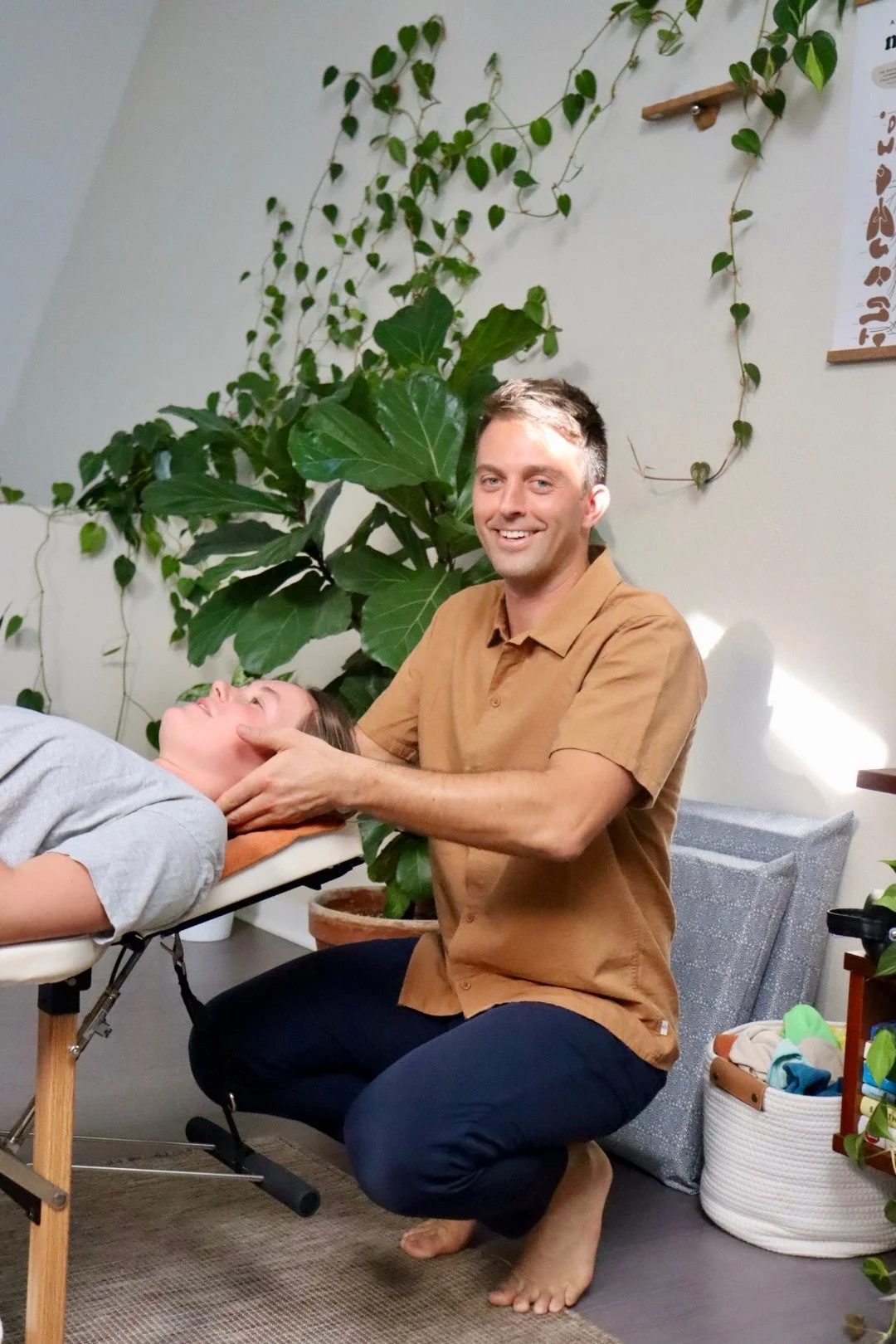
About the Author • Dr. Joe Thompson
Dr. Joe Thompson is the founder of Rhythm Health & Performance in Santa Cruz, where he helps parents, kids, and families find their rhythm through nervous system-focused chiropractic care. With a background in biological sciences from Cornell University and advanced training in pediatric and perinatal care, Joe believes there's more to health than chasing symptoms. His approach is all about understanding the bigger picture, supporting the body's natural ability to adapt, and helping families feel heard, cared for, and confident in their health.
Curious about what care at Rhythm could look like for you or your family?